1 inch Is a Small Measurement With Many Everyday Uses

1 inch Is equal to 2.54 centimeters, 25.4 millimeters, or one twelfth of a foot. People use 1 inch to describe short lengths, narrow widths, screen sizes, hair tool plates, margins, hardware, labels, and many household objects. If you need a quick mental picture, 1 inch is close to the width of many adult thumbs, the length of a standard paperclip’s short side, or a small mark on a ruler between 0 and 1.

1 inch can look modest on paper, but it becomes important when a size needs to be checked quickly. A gap of 1 inch can decide whether a shelf clears a wall trim, whether a photo fits a frame, whether a button feels easy to press, or whether a styling tool is narrow enough for shorter hair. Because the inch is still common in the United States, product pages, craft plans, packaging, tools, and repair instructions often rely on it even when metric measurements are also available.

The useful part of 1 inch is that it is small enough for precision but large enough to estimate with common objects. A person who does not have a ruler nearby can still make a rough judgment by comparing against a thumb width, a large coin, a bottle cap, or a phone accessory. Those comparisons are never perfect, yet they help when the question is whether something is roughly 1 inch, much smaller, or clearly larger.

What is 1 inch in simple terms?

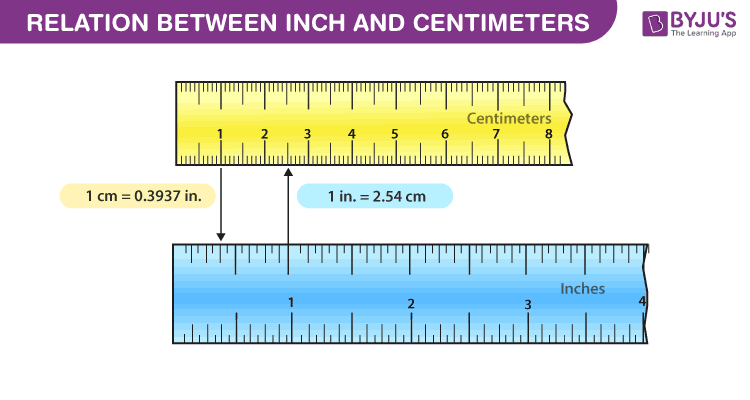
1 inch is a unit of length in the imperial and United States customary measurement systems. In formal terms, 1 inch is exactly 2.54 centimeters. That fixed conversion means 1 inch does not change from one ruler, product page, or country to another, even though different places may prefer different measurement systems. Twelve inches make 1 foot, and 36 inches make 1 yard.

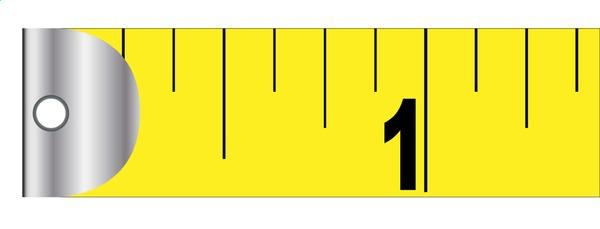
1 inch appears as the small numbered interval on a standard ruler or tape measure. On many rulers, the space from the zero mark to the first large numbered mark is 1 inch. Smaller tick marks divide that same length into halves, quarters, eighths, or sixteenths. That is why a measurement such as 1 1/2 inches or 1/4 inch is often shown near 1 inch on packaging and instruction sheets.

In practice, 1 inch is used when centimeters may feel too fine and feet may feel too large. A phone case thickness, cabinet pull diameter, picture-frame border, candle diameter, dog collar width, or flat iron plate width might all be described around 1 inch. The number gives shoppers and builders a compact way to compare sizes without needing a long description.

How big is 1 inch compared with common objects?

1 inch is close to several everyday reference points, though none of them should replace an actual ruler when accuracy matters. The width of an adult thumb is a familiar estimate, and that connection appears in several languages where the word for inch is related to the word for thumb. Still, thumb sizes vary, so the comparison works best as a quick visual aid rather than a measurement standard.

A better way to imagine 1 inch is to compare it with objects that are manufactured to fairly consistent sizes. A U.S. quarter is just under 1 inch across, so it gives a useful near-match. A standard paperclip is often a little longer than 1 inch overall, while the shorter side of many small paperclips is closer to the target. A typical bottle cap, small button, or compact eraser can also fall near the 1 inch range.

1 inch is also easy to see in home and personal-care products. A 1 inch hair straightener plate is narrow enough for detailed styling and curls, while a 2 inch plate covers more hair at once. A 1 inch screw, pipe fitting, drawer pull, or strap width can be small in the hand but large enough to change how a project works. The context matters because 1 inch in length, width, diameter, and thickness can each feel different.

How do you convert 1 inch to centimeters and millimeters?

1 inch converts cleanly because the official relationship is exact: multiply inches by 2.54 to get centimeters. For 1 inch, the calculation is simple, so 1 inch equals 2.54 cm. To convert inches to millimeters, multiply by 25.4. That means 1 inch equals 25.4 mm. These values are useful for international product listings, engineering drawings, school assignments, and online size charts.

1 inch can also be converted in the opposite direction. Since 1 centimeter is about 0.3937 inches, a 2.54 centimeter object is exactly 1 inch. Since 1 millimeter is about 0.03937 inches, 25.4 millimeters is exactly 1 inch. If you are comparing a metric ruler with an inch ruler, the 25.4 mm mark is the same distance as the 1 inch mark.

For quick mental math, many people round 1 inch to about 2.5 centimeters. That rounded figure is fine for casual estimates, but it can create small errors when repeated over longer distances. Ten inches rounded at 2.5 centimeters becomes 25 centimeters, while the exact conversion is 25.4 centimeters. For clothing, hardware, screens, and installation work, exact values are usually safer.

Measurement Equivalent size Common use
1 inch 2.54 centimeters General metric conversion
1 inch 25.4 millimeters Hardware and technical sizing
1 inch 1/12 foot Construction and room measurements
1/2 inch 12.7 millimeters Small parts and margins
1/4 inch 6.35 millimeters Crafting, fasteners, and spacing

Where does 1 inch show up in everyday products?

1 inch appears in product names and specifications because it communicates a practical size quickly. Hair tools are a clear example: a 1 inch plate on a straightener or curling tool usually means a narrower styling surface that can handle shorter sections, roots, bangs, face-framing pieces, and curls. The same product category may offer wider plates for longer or thicker hair, so the 1 inch label helps shoppers compare function.

1 inch also shows up in kitchenware, craft supplies, office products, and home repair. A 1 inch label, binder spine, ribbon, hook, knob, washer, screw, or piece of trim can be the exact scale needed for a tidy fit. When the size is printed on packaging, it may refer to length, width, diameter, opening size, or working surface. Reading the label carefully prevents confusion.

In technology, 1 inch can describe sensor formats, screen margins, cable openings, speaker drivers, mounts, and accessory dimensions. It may not always mean the visible outside measurement; sometimes it reflects a trade size, nominal size, or historical naming convention. If a part must fit another part, a 1 inch label should be checked against the detailed dimensions, not treated as the only specification.

1 inch measurement shown on a ruler

How can you measure 1 inch accurately?

1 inch is easiest to measure with a ruler, tape measure, caliper, or printed scale that has been verified. Place the object against the zero mark, keep your eye directly above the measurement line, and read the mark where the object ends. If the ruler starts with a worn edge before the zero mark, line the object up with the 1 inch mark and subtract from there.

1 inch can be measured more accurately when the tool matches the job. A flexible tape measure is useful for curved objects and body measurements, but it can bend or stretch slightly. A metal ruler works better for flat surfaces. A digital caliper is better for small parts, inside diameters, and thicknesses. For a rough visual check, a ruler app can help, but screen scaling and device settings can make it unreliable.

For a new user, the most common mistake is reading the wrong tick mark. On many inch rulers, the longest marks are whole inches, medium marks are half inches, and smaller marks show quarters, eighths, or sixteenths. If you only need 1 inch, focus on the first whole-number mark. If you need a size slightly above or below 1 inch, identify the fractional marks before measuring.

  1. Choose a ruler, tape, or caliper with inch marks.
  2. Align the item with the zero mark, not the edge of the tool.
  3. Keep the tool straight along the length or width being measured.
  4. Read the point where the item ends at the 1 inch mark.
  5. Convert to metric only after recording the inch measurement.

When does 1 inch matter more than it seems?

1 inch can be the difference between a comfortable fit and a frustrating one. In a drawer, a 1 inch clearance gap may decide whether a tray slides in cleanly. Around a door, 1 inch can affect whether a rug catches. On a wall, 1 inch of spacing can make a row of hooks look intentional or uneven. Small dimensions become visible when several objects line up together.

1 inch matters in personal items because human scale is sensitive to small changes. A bracelet that is 1 inch too loose may slide too far, while a belt hole 1 inch away changes the fit noticeably. In hair styling, 1 inch sections can help heat reach strands evenly, while larger sections may take longer. In sewing, a 1 inch seam allowance or hem can change the drape and finished length.

In shipping and storage, 1 inch can affect whether an item fits a box, shelf, envelope, or bin. Online product photos can make objects appear larger or smaller than they are, so checking the listed inch dimensions is a simple way to avoid surprises. When a page says 1 inch, look for whether that means height, width, depth, diameter, or a specific working part.

What are the benefits of using 1 inch as a reference size?

1 inch is useful because it is familiar, compact, and easy to communicate. Many people can visualize 1 inch better than they can visualize 25.4 millimeters, especially in places where inch rulers are common. It works well for quick comparisons, product names, classroom examples, craft instructions, and do-it-yourself projects that do not need large units.

Another benefit is that 1 inch sits between tiny technical measurements and larger construction measurements. It is more precise than saying something is small, but less awkward than using many decimal places. Saying a strap is 1 inch wide, a margin is 1 inch, or a tool plate is 1 inch gives the reader an immediate sense of scale.

1 inch also links well to fractions. Half an inch, a quarter inch, and an eighth inch are common divisions on rulers and in practical instructions. That makes 1 inch a natural base for adjusting size up or down. A person can see whether an object is about 1 inch, closer to 1/2 inch, or closer to 2 inches with a quick comparison.

What are the risks of estimating 1 inch without a ruler?

1 inch estimates can be misleading when the job requires a snug fit. Thumbs, coins, caps, and household objects vary. Even if an estimate is only a few millimeters off, that error can matter for screws, holes, brackets, jewelry, eyewear, replacement parts, and appliance clearances. A rough comparison is helpful for screening, but it should not be the final check for anything expensive, permanent, or safety related.

1 inch can also be confused with nominal sizes. Some products use a size name that does not equal the exact outside measurement. Pipe, lumber, displays, and specialty parts may have naming conventions that differ from physical dimensions. If the item must connect to another item, use the manufacturer’s detailed measurements and compatibility notes rather than relying on the phrase 1 inch alone.

Another risk is mixing inches with centimeters incorrectly. A value of 1 inch is not the same as 1 centimeter. The difference is large enough to cause a failed fit. When converting, write down the unit beside the number and avoid switching between decimal inches, fractions, centimeters, and millimeters without checking the math. For important purchases, verify details with official product information before ordering.

1 inch measurement shown on a ruler example 2

How does 1 inch compare with nearby measurements?

1 inch feels different when compared with nearby sizes. A half inch is clearly smaller and often used for narrow trim, small tape, thin margins, or compact hardware. A quarter inch is much smaller and common in craft cuts, drill bits, and spacing. Two inches is twice the width and can feel substantially larger in a tool, label, strap, or border.

1 inch compared with 1 centimeter is a common source of confusion. A centimeter is less than half an inch, so an object that is 1 centimeter wide will look much smaller than 1 inch. In millimeters, 1 inch is 25.4 mm, while 10 mm is only about 0.39 inches. Metric values can be more precise, but inch values may be easier for quick visual comparisons in U.S. retail contexts.

For product shopping, 1 inch should be compared against the use case rather than treated as universally small or large. A 1 inch earring may be noticeable, a 1 inch shelf gap may be minor, a 1 inch plate on a hair tool may be versatile, and a 1 inch error in a cabinet layout may be serious. The same number changes meaning with the object.

How should you use a 1 inch size guide before buying or building?

1 inch is best used as a first-pass size check. Start by identifying what dimension the seller or plan is describing. Then compare 1 inch with the space where the item will go. If you are buying a tool, ask whether 1 inch describes the working surface, opening, blade, plate, diameter, or attachment. If you are building, mark the actual length before cutting or drilling.

In practice, a simple workflow prevents most mistakes. Read the product dimensions, convert 1 inch to metric if needed, mark the size on paper or painter’s tape, and place that mark where the object will be used. This makes 1 inch visible in the real environment rather than abstract on a screen. It is especially helpful for decor, shelves, frames, personal accessories, and replacement parts.

1 inch is a small measurement, but it has a large role in everyday decisions. It connects rulers, product specifications, home projects, grooming tools, crafts, and online shopping into one familiar unit. When accuracy matters, measure instead of guessing. When speed matters, use 1 inch as a practical reference point and confirm the exact size before the choice becomes difficult to change.

Reader rating: 4.9 / 5 based on 923 ratings

Questions and Answers

How many centimeters are in 1 inch?

1 inch is exactly 2.54 centimeters. This is a fixed conversion, so it does not change by product, ruler, or country. For quick estimates, people often round 1 inch to about 2.5 centimeters, but exact work should use 2.54 centimeters, especially for parts, layouts, crafts, and purchases where a small difference could affect fit.

How many millimeters are in 1 inch?

1 inch is exactly 25.4 millimeters. Millimeters are often used for hardware, technical drawings, replacement parts, and international product specifications because they allow finer detail than centimeters. If an item is listed as 25.4 mm, it is the same length as 1 inch. If it is listed as 10 mm, it is much smaller than 1 inch.

What common object is about 1 inch wide?

Many adult thumbs are close to 1 inch wide, which makes a thumb a useful rough reference. A U.S. quarter is also just under 1 inch across, so it can help with quick visual comparison. These objects are only estimates, though. For any item that must fit accurately, use a ruler, tape measure, or caliper instead of relying on an everyday object.

Is 1 inch the same as 1 centimeter?

No. 1 inch is much larger than 1 centimeter. Specifically, 1 inch equals 2.54 centimeters, while 1 centimeter equals about 0.39 inches. Confusing the two units can cause noticeable sizing mistakes. When comparing product listings or instructions, always check the unit beside the number and convert before cutting, ordering, installing, or measuring a finished space.

How do I measure 1 inch on a ruler?

To measure 1 inch, place the object at the zero mark on an inch ruler and read the first large numbered mark. That space from zero to one is 1 inch. If the ruler edge is worn or does not start exactly at zero, align the object with another whole-inch mark, measure to the end, and subtract the starting point.

Why do product pages use 1 inch in descriptions?

Product pages use 1 inch because it quickly communicates a small but practical size. It may describe width, length, diameter, thickness, clearance, or a working surface such as a tool plate. The phrase is easy for many shoppers to visualize, but it is still important to confirm which dimension is being measured and whether the listed size is exact or nominal.

When is a 1 inch estimate not accurate enough?

A 1 inch estimate is not accurate enough when the object must fit into another part, align with holes, meet a safety clearance, or support a finished installation. Hardware, plumbing parts, brackets, eyewear, jewelry, shelves, and appliance spaces often need precise measurements. In those cases, use a measuring tool and check official product dimensions before buying or modifying anything.

Search on Youtube!

1 inch

Privacy Policy

Terms of Service

Refund Policy

1 inch

Free shipping on orders over $50

Product details

Rejuvenate your hair while you style and create a look that radiates shine and confidence with REMINGTON® Shine Therapy™. The REMINGTON® Shine Therapy™ Argan Oil & Keratin 1” Hair Straightener/Flat Iron delivers shine-enhancing results for up to 50% shinier^ and 68% smoother† hair. The Advanced Ceramic plates contain 9X more ceramic** for even, consistent heat and are infused with a micro-conditioner, antioxidant-rich Argan oil, and protein-rich Keratin. As you style your hair, the infused plates transfer the micro-conditioner onto the hair to reduce frizz for smooth, radiant shine. Whether you want straight, shiny locks or sultry, smooth curls, this is the perfect styling tool to achieve your favorite look. Use with the full suite of REMINGTON® Shine Therapy™ products.

*micro-conditioner + advanced ceramic.
**vs Remington® standard ceramic straightener.
^vs naturally dried hair in 3rd party lab testing. Results may vary by hair type.
†based on plate smoothness vs standard Remington® ceramic coating.